Wednesday, August 20, 2008
Sporno

So, after having gone through all the trouble to reason out whether to watch the opening ceremonies for this year's Olympics or not, I slept through them, and woke up just in time to see the end of the athletes' march. And then I missed the repeats. Twice.
It just wasn't meant to be.
I blame it on the time difference... I'm back in Alberta visiting the fam for a few weeks, and got to fulfill my one aspiration in Calgary this summer: to watch the games with my grandpa in his authoritatively climate-controlled condo (he's way more serious about this than those officials in Beijing, I assure you) and eat cheese buns. My personal highlight, of course, has been the men's diving. Everything after this is just icing on the cake.
Hilariously, my grandpa actually bet that our-man-from-Laval Alexandre Despatie wouldn't even place because he did so poorly in the preliminaries. 'He got too fat,' he concluded. Well, Alex, I'll admit you've put on some muscle since you were *thirteen years old*, but I'd say you did pretty well for yourself. Thanks for a great show.
And it is all a show, of course... did anyone else read this headline? '77 applications, no protests at Beijing Games,' reports the always credible Xinhua news service from Beijing. Shockingly, they report that 74 of the applications to protest at the three Olympic venues pre-approved for demonstrations were 'withdrawn after amicable settlements between the parties and authorities.' Two others had some problem with their application, they say.
One, apparently, did not meet the proper criteria for government-sanctioned protest, for unexplained reasons. I wonder what they could be.


Thursday, August 07, 2008
That Man

A different Emerson altogether, but the similarity in nose profile is striking, isn't it?
Does anyone else find it grossly embarassing a) that our new Foreign-Affairs-Minister-by-default-because-no-one-else-elected-was-available-
and-another-cabinet-appointment-might-make-for-bad-optics David Emerson is tripping all over himself this week to make sure Beijing is absolutely clear that Harper means no offense whatsoever by not attending the opening ceremonies and b) that his man holds a cabinet position at all?
I've got to admit, the Conservatives here have a knack for timing. Who else could have had the balls to use the almost unbelievably stupid affair with Maxime Bernier and the misplaced NATO briefing to slip in Emerson as his replacement without eliciting more than a peep of outrage? Surely there are others among us who remember that this is the same David Emerson who unabashedly crossed the floor immediately after being elected for the Liberals in 2006 for a bright new career with the Conservatives?
Saturday, July 26, 2008
Strange Games

Human rights at the 08 Games... not so much.
Yeesh. Apologies for the delay. The hurricane of classes and exams has abated. Without further ado:
"Beijing Arrests Fat Chinese Children Ahead of Olympics"
BEIJING - As part of its urban beautification program ahead of the upcoming Olympic Games, the Chinese government has rounded up all the fat children in the city and deported them to a detention facility in the suburbs. The state newspaper Xinhua reported that “ China must present its very best image as an athletic and advanced nation,” quoting unnamed spokespersons. The removal of fat children from the view of visitors and press is seen as a crucial to maintaining “Olympic Spirit,” the article went on to say. Parents of the detained children, who were rounded up by police armed with non-lethal electrical stun devices in city-wide sweeps over the weekend, have been notified by mail and can pick up their children on September 1. Reports that the children will undergo nutritional and fitness re-education could not be confirmed at press time.Okay, obviously the writers over at NotTheNation.com have their tongues firmly placed in cheek with this bit. But it's true that Beijing has gone all out preparing for these games. I mean allll out. How many cities basically quadruple how long and useful their subway system is to host this show, and do it on time? Not many. How about building two national athletics arena more ambitious in scope and design than anything the country has ever seen, and with a high likelihood of not leaving behind a municipal disaster for the locals to clean up for decades to come? Literally unprecedented (if still so-so) accessibility of facilities being put in and training of employees to show respect and understand the needs of visitors with disabilities? A Great Leap Forward-esque level of nationalist fervour?
That last point there is the most revealing to me. Not just about these games but about modern China as a whole. Since the foundation of the People's Republic in 1949, the Chinese Communist Party has done a laudable job (if it's the kind of thing you're inclined to laud) of moving itself into the public consciousness as essentially synonymous with Chineseness. Unswerving allegiance to distant, authoritarian rulers has a rich and storied history in China; the Communist Party's place in the middle of this solar system of paternalism is in many ways just its modern manifestation. And they've certainly capitalized on the filial piety-glorifying legacy of Confucianism - Father knows best, or at least, Grandpa Deng and the gang do anyway.
Why is this relevant? In large part because it's as much a face-gaining event of unprecedented scale for the Party as much or moreso than it is for the citizens of China. Most people in Canada of my generation probably think of the massacre in Tiananmen Square in Beijing in 1989 when they think of this government. Older generations might remember the brutality of the Cultural Revolution and the Great Leap forward more vividly. The picture's more complicated than this, but the connection is worth making. Especially when the question comes up of whether an international boycott is merited - be it in viewership, attendance of political leaders, or participation of athletes
The Communist Party today is just as oppressive, brutal and secretive as it was in 1989, if not moreso - albeit with better international PR. They've killed 'terrorist splittists' left and right this year in Xinjiang and Tibet, and are definitely responsible for propping up some pretty brutal regimes in Sudan, Burma, and other places where unsavoury governments commit similarly heinous crimes on their own citizens. It's absurd that the government and many many others are fooling themselves into thinking the Olympics aren't a political event. They might just be the most dramatic political event a country can host, short of an extraterrestrial landing or something.
 The Communist Party is definitely banking on good publicity from a showy, expensive, tightly controlled games going off without a hitch - a long way from the images in the West, at least, of families in Mao suits riding bicycles down leafy avenues to their tiny brick homes where everyone's eating porridge for three meals a day in destitution for the good of the nation. So with all of that in mind, yes, a boycott is a good way to undermine the credibility of the regime, credibility they're desperately trying to drum up with this thing. It's a powerful political tool, although it would be moreso if the Canadian team, for example, just wasn't going, rather than trying to encourage a mass viewing boycott.
But on the other hand, Chinese people have invested a lot emotionally into the hard work of hosting a really incredible show - every city of any size you go to in China has had Olympic-related athletic events and memorabilia on sale for years already. The overwhelming majority of people there are expecting to gain a lot of face from hosting a well-organized games, showing off the lipstick of the Middle Kingdom as it were, with Beijing all rouged up and so on. And I know a lot of people over there find it hurtful, find it actually personally offensive that so many people in North America and Europe are calling for a boycott because they see it as essentially calling them bad hosts, and there is a legitimate beef there that it's pure hypocrisy for people from Canada to defend our right to host the games but not China's on the basis of their human rights record, when we have such an appalling history of brutal colonialist policies like residential schools in our own very recent past and continuing into the present, and our own litany of racist institutional acts like the Chinese headtax and the disenfranchisement of First Nations voters and the policies towards Africville in Halifax and so on and so on...
So are the Olympics the venue to stir shit up, and make it very very public that the Chinese government is doing some monstrous things to its own people and propping up other regimes behaving horrendously in their corners of the world? I think so, definitely. The Globe and Mail has reported just this weekend (for real) on the increasingly authoritarian social and political controls being wound up in the run-up to these games. Some had anticipated this event might be the beginning of a road toward greater respect for human rights and public accountability at home and abroad. there's been reactionary crackdown after crackdown, and things are likely to get worse before they get better. The riots this month in Guizhou province's Weng'an county being a case in point, over the apparently cavalier dismissal of local Li Shufen's suspected murder and rape - by a group of men who may have included one relative of a local police officer - as nothing more than a suicide. The initial response to the crowds of 30 000 trying to burn down the station over allegations of corruption?
Arresting 300 protesters, asserting that 'the family were "too emotionally unstable" to accept the results of the "careful investigation according to the law"'
and accusing
'gangsters and others with ulterior motives of whipping up local residents' anger, warning that such offenders faced strict punishment.'
Human Rights Watch, Amnesty, Human Rights First are doing exactly the right things making people aware of China blocking even the simplest progress on human rights like sanctions on the government in Zimbabwe over the sham elections and the violence Mugabe is pushing over there. Using the intense lens on Beijing as a platform for this kind of stuff is brilliant.
But a boycott on watching them?
The cynic in me says get real, this is going to be a fricking amazing show and I can't imagine who would want to miss it. The idealist in me says yes, it would make the government lose face, which it should, in buckets. But then again, it also risks offending 1.3 billion people who feel understandably a bit sensitive about the whole thing, and it's them I think we should be engaging with to get them to push for better government for themselves, greater respect for human rights, and for better foreign policy from the Chinese government abroad.
Last year, my friend's dad and I got into an argument over this idea that the rest of the world should be afraid of the 'peaceful rise' of the People's Republic. It's largely just fearmongering from those scared of losing a monopoly on power in the American de facto empire, but he was also arguing that even if China became a superpower economically, politically and militarily on the same scale as the US, at least they wouldn't be going around acting like the World Police telling everybody what to do. Except, that just like the officials in Weng'an, in many countries - by its action and inaction - China is already doing so. For all of our sake, this is an opportunity worth using at the very least shame the government into doing so with more humanity.
Labels: burma, china, human rights, politics, sudan
Wednesday, July 16, 2008
Wait for it...

Zig when you zag
Tomorrow: Since so many people have asked and I want to explain my take on the whole thing, my rundown on the Beijing Olympics. You're all on pins and needles with anticipation. I know.
Labels: china
Thursday, July 10, 2008
Going the distance
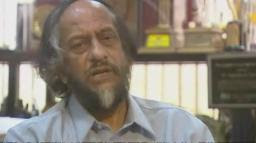
'Stringent mitigation will cost the world no more than 3 percent of global GDP in 2030.' - Nobel Prize-winning environmentalist R K Pachauri (link to BBC interview)
I just received my semi-annual newsletter from CO2RE, Edmonton's lacklustre (but well-intentioned) attempt to push ways to reduce individual carbon dioxide emissions. They're offering a furnace retrofit rebate of 500 bucks, and up to 2000 for low-income households. You can even get a coupon for a free first month from our residential green power supplier, bullfrog power. It's a step.
But it's not enough, for a lot of reasons. The most important:
1. It's too gentle. Edmontonians don't need to be gently led by the hand, they need to be pushed.
2. Its stated goals of 20 percent reductions in the city by 2020 are probably not enough to do any major damage one way or another.
3. It only addresses individual greenhouse gas emissions, not systemic problems like a coal and natural gas-dependent energy infrastructure or an economy fueled by Athabasca bitumen.
It's been said time and time again, but it still makes a lot of us uncomfortable (sometimes angrily so), so I'll say it again: addressing climate change is going to require changing the way we live. Yet it seems as though a relatively small amount of action will help head off the worst crises, and save us time, money, and lives in the effort. So why aren't we taking those steps?
Somewhat mysteriously, our local rag the Peterborough Examiner, not exactly a bastion of earth-shattering journalism these days (though, incredibly, it was once edited by Robertson Davies), carries a semi-regular column by David Suzuki. A couple weeks ago, he was discussing our continuing, daily failure to really step up to the plate right now and take action that will move us away from a carbon-intensive society to a carbon-neutral one. Dion and the Green Party's carbon tax proposals are one strategy, and one that's been proven effective in Scandinavian countries. Refusing to allow new projects in the tar sands up in Athabasca is another. Moving immediately away from fossil-fuel dependent methods of growing crops (corn-based ethanol, anyone?) would be a modicum closer to good sense, I think.
So, Grandpa Suzuki says, why not act now? Why not take demonstrative, immediate action to reduce our GHG emissions? It's true that the scientists on the Intergovernmental Panel on Climate Change are only 90% sure that humans are responsible for the rapid global climate shifts we're seeing right now. If a nurse told us it was 90% certain that something we were eating could kill us, would we still take the risk?
This is the question Harper and the other leaders of the G8 have failed to answer adequately at this week's summit in Japan. Committing to an unambitious long-term goal of 50% GHG emission reductions by 2050 with no short-term commitments and no binding agreements - should we be surprised that the 'developing' countries like China, India, Indonesia, and South Africa that joined the summit yesterday laughed them off? And what was the year from which they wanted to reduce those emissions anyway? It's true that in Canada our overall percentage of global carbon emissions is only a few percent; while wildly high for our proportion of the global population, yes, you can make this ludicrous argument that our individual reductions in emissions will not put much of a dent in the global picture. As Raj Patel says, China just ate that for breakfast. India just ate that for lunch.
But without demonstrating leadership on our own behalf, and making real, bold commitments to help countries with much much fewer economic resources to make shifts toward sustainable societies, why should we be at all surprised that the big emitters - the US, China, India, and on and on - don't take us seriously anymore when we say we want to help address the problems? It's time to pony up. And it's time to have a more serious debate than we've shown we're up to. And moreover, as R K Pachauri says in the interview above, it's time to move from discussions to decisions.
Friday, May 16, 2008
Kind words and hard work
 Relief efforts in Sichuan after this week's earthquake
To all of you who wrote in asking how everyone back in Sichuan is, thank you for your kind words. I've gotten a hold of or heard news from most of the people I know back there, and so far everyone is okay. Chengdu, the city I was living in, escaped relatively unscathed from the earthquake. It looks like the government is working extremely diligently to get in as quickly as possible to help to people in worse-affected areas like Mianyang.
I'm genuinely impressed with how hard the army has been working, though of course there are still towns and villages that remain blocked off from relief efforts, and the most critical 72-hour window of survival has now passed. As Danwei explains, the government should be commended for its response to this disaster, which stands in stark contrast to the refusal to accept outside help and complete media lockdown of the city of Tangshan in 1976, after the earthquake there killed over 200 000 people.
I strongly encourage you to donate generously to relief efforts over there. I can't find an English section of the Chinese Red Cross site and the site has (obviously) been extremely busy, but the Canadian Red Cross is setting aside a special fund for the earthquake relief here. If you live in Toronto, you can also donate to an account set up for victims in Sichuan through the Bank of China.
Less positive has been the insane, jealous behaviour of the military regime in Burma since the cyclone hit. Aid workers are still having an incredibly difficult time getting access to people in crisis in the country. Much of the problem is the goverment's reluctance to allow outside help in out of fear of foreign aid workers and journalists stirring up already-brewing civil unrest in the midst of a rigged referendum on a draft constitution. I have an article in Vue Weekly this week about a new community of people in Edmonton who originally come from a part of Burma called Karen State. You can read it here.
Monday, May 12, 2008
Soliciting any and all news
 I was pulling a granola bar out of my backpack or something equally meaningless this morning in class when I heard somebody say the word 'Chengdu.' And then the word '7.8.' And, having long since claimed ownership of all issues Sichuanese for myself, I asked what they were talking about. If you haven't heard about the earthquake yet, that's how I heard the news. The price I pay for sleeping through my the news on the radio this morning, I guess.
I called my friend Sun Im today - at about 3 in the morning Beijing time - to see if she was alright over there. It turned out she'd actually left the city to take a trip to Xi'an for the week. I think beyond being sort sort of bewildered about who would call at such an ungodly hour, she was a little surprised to hear a voice from halfway around the world that early (or late). I haven't been able to get a hold of anybody else in Chengdu yet. It makes something sink to the bottom of my stomach to think how many friends and loved ones are over there who I haven't spoken to for so long.
This picture's of a man in Dujiangyan, one of the towns that was hit by the earthquake. The title of this picture on my computer is "卖叶儿粑的 [Mai ye'erba de]," which roughly translates into 'dude selling the ye'er ba,' which are those delicious little greasy doughy things down there wrapped in... banana leaves, I think? He seemed bemused at being photographed - a pretty congenial guy, actually. My friend Jang Hu and I took a weekend trip to Dujiangyan as a sort of end of semester present to ourselves last July. It's kind of a weird town to take a trip to on a whim - its main attraction is the impressive ancient canal system, not exactly the sort of thrill you'd imagine would make for a wild weekend.
The Greyhoundesque bus we took that dropped us off literally in the middle of an intersection between two highways fifteen minutes away from anything recognisably town-like seemed like not a great omen. But once we got somebody to take us into the town proper in a tiny little autorickshaw, we spent the rest of the day taking pictures of each other making the Asian fingers in front of the roaring waterways - actually, stampeding would be more accurate than roaring, you could feel it going by just standing on the shore - and trying to make friends.
It didn't take long to find my favourite fixture of any town in Sichuan: teahouses. Side by side, they went on for blocks all along the side of the river. We stood and watched a group of people laughing and slamming their mah-jong tiles down on the table for a while. Eventually they invited us to play a round with them. Mah-jong over there, with a huge plastic thermos of hot water for your never-ending glass of tea beside you, is serious business. People love to gamble. What can I say. But they joked around with us and told us to sit down and play a hand with no buy-in, no expectations. They knew we were terrible at the game and spoke shoddy Mandarin, never mind more than a handful of words of Sichuanhua. We were just some random international students, not even from anywhere particularly exotic. But they let us play with them anyway. I broke even, thankfully.
I ran into my fair share of people who stared and shouted 'Hello!' when I walked down the street in Chengdu. But in every small town I went to in Sichuan, people seemed for some reason a hundred times more willing to accept me as I was. Tall, illiterate foreigner that I was, I met many a grandmother who would stop and talk with me and my friends about her life, about her village, about her work. Not too familiar, just a polite little country road chat and then we were on our way. I miss it. And I miss the ever-present whiff of hot chili and stomach-churning stinky tofu, of course.
Wenchuan, Anren, Dayi, Dujiangyan, Wolong... if you're thinking of Sichuan at all today, I hope some of these stories stick. With the riots in the Tibetan parts of the country, the Carrefour boycott, and now the Olympics coming up, this is kind of a historic year of mixed proportions over there. Here's to hoping everyone there makes it through okay, and to everyone who didn't, that their families get the peace and support they need.
Labels: china
Tuesday, August 28, 2007
Ravenous smokestack
 A view crossing the Yangtze River in Sichuan Province, China
The New York Times published a brilliant series of written, audio and video pieces this weekend on the costs of the outrageous pace of China's economic growth. It is poignant to see in bold headlines in an American paper the kinds of problems that surround you every day in China but are still minor heresies to complain loudly about.
Chief among these costs, of course, is the nightmarish levels of pollution and environmental degradation, still climbing. A doctor told me that Chengdu, whose air seems alpine by comparison to Beijing, is still so toxic that just breathing is the equivalent of sucking back a pack a day. Some public response is mounting, but where are the strong and powerful voices pushing for change?
Why are we unable to change the way we live until catastrophe strikes (and sometimes not even then)? Many of these crises are forseeable years, even decades before they happen. Why are we unable to plan ahead for the calculable costs of self-destruction?
This slideshow is worth watching just for the music by (evidently Canadian-born) Rasputina cellist Zoe Keating.
Edit: Every time I get burned by linking to that website. Why do I keep forgetting how quickly their free-ness disappears?
Labels: china, environment
Wednesday, August 15, 2007
Sappy pappy
 You should probably know that one of my greatest pleasures in life is listening to Mando-pop superstar Wang Leehom (AKA Leehom, AKA 王力宏, etc etc). In fact, as you're reading this, it would not be unreasonable to imagine me writing this post and shimmying in small movements back and forth to the infectious wonder that is Xin Zhong De Ri Yue, his second-last album. Yes, that was me you recognised in line with 20 000 weeping Chinese girls when it came out, waiting hours and hours to get him to sign my copy at So Show shopping centre.
But like all good Chinese pop stars, Leehom doesn't just make music. No, he also makes movies (one of which, coming out soon, looks like it might actually be worth watching). And does ads for things. A lot of things. For anything bloody company that will flash him a wad of cash and a bit of leg, to be honest.
I've known this as long as I've been listening to him (not decades). I've even got an mp3 of the awful piece of corporate shite he did for McDonald's, Wo Jiu Xihuan. But it still broke my heart when I saw him grinning back at me for the first time a few months ago from Wahaha bottled water. Bottled water? Really? From a man who talks up environmental responsibility and just released his first "green album"?
But then again, the situation around bottled water here in North America isn't the same as over in China. Here, unless you have been totally misled about the quality of what's coming out of your tap, you know that you more than likely have access to some of the cleanest, safest water in the world, and for less than pennies per liter. From a tap! In your house! We drink bottled water because it's more convenient than planning ahead to bring some when we go out, because pretty much every alternative at the vending machine is bad for you, and because... well, because it's everywhere.
In China, people usually drink it because they're going to get sick if they drink the tap water without boiling it, because it still has that sheen of luxury to it, and because the other popular alternative for middle class urban families is getting it by the jug for your cooler, which isn't quite as toteable or stylish. But despite Wang Leehom's undeniable marketing appeal, it's still absurdly unaffordable for many millions more than all us Canucks up here gurgling cheerfully.
We have a lot to be thankful for.
This hit me watching Michael Moore's new documentary Sicko with my friend Angela the other day. I honestly did not realise how fortunate we are to have universal health care in Canada. There are a nightmarish litany of agonising choices we will never have to make, crippling debts we will never have to find ourselves in when we get sick, because we have decided, collectively, that it's up to all of us to take care of each other when we do. And I am so grateful for it. (Look! Maybe the Globe and Mail just watched Sicko the other day too. I am imagining a big pajama party. Dozens of journalists in Winnie the Pooh fleece bottoms, with twizzlers, notepads, and Orville Reddenbacher. I am imagining Rex Murphy not amused).
We're racist, ignorant, selfish, and short-sighted in many ways. We have a lot of history to come to terms with, and a lot of problems to overcome ahead of us. But on the whole, I think I'm having a Margaret Wente moment; a genuine appreciation for what battles have been brought to bring us where we are today, to a place where, for the most part, we take care of each other and we get along. I am constantly learning how truly remarkable those things are.
Labels: canada, china, environment, music
Friday, August 10, 2007
Worth mentioning
 I'd like to offer a long-overdue unexplaination for my extended absence: I have spent the semester studying away and over in China. In case that wasn't clear from the picture on the last post of the great big PLA tank being greeted by throngs of Hong Kongers at the 1997 handover to the People's Republic. When we left off, I wasn't sure it'd be a good idea to keep up a blog writing about the things I'd like to while a guest of PRC government. If there does indeed come a time to get thrown in jail for my writing some day, I'd at least like to achieve some basic fluency in the local language of my toothlessly grinning, merciless captors. My Mandarin, sadly, lacks any real grace or wit at the moment.
Which is probably all for the best, because Blogger just happens to be blocked a good deal of the time on the Mainland anyway. Along with the BBC, anything remotely originating in Taiwan, a great fistful of human rights websites, and - on a number of university campuses - our beloved Wikipedia. You don't know what it is to search for information and have no excuse to while away (wile away?) the hours clicking through chronologies of Bill Murray's hairdressers, disco influences on 1980s Hindi music, and Swedish shipwrecks.
More to the point, it is frustrating to live in a country where meaningful debate about broad issues in society is dictated by what a handful of smiling, ideologically-bent old veterans in Beijing allow people to debate about. This is equal parts 11 o'clock news and ingrained dislike for boat rocking. Given the massive upheavals China has gone through over the past century it is perhaps understandable, this nationwide aversion to having (or taking) responsibility decision-making. But there are a few voices putting up an intelligent fight to get the information out to help people make those decisions, and I would really like to bring your attention to one of them.
China Dialogue, whose Chinese name, 中外对话, actually means something closer to "China-Rest of world Dialogue," is a really really brilliant website focussing on the relationships
 between China's environment, economy, society and politics, and has a really and truly unique way of bringing other countries into the picture too. The tone of the site is very accessible for general laypeople (such as myself), even on the heavy sciencey articles, but the best part, and the most critical, is that it features side-by-side translations of comments and articles in English and Chinese throughout the site, opening a real dialogue between what otherwise might as well be two separate worlds: China and "The rest of us."
I was initially attracted to the site because one of their regular contributors is Ma Jun, author of a book called China's Water Crisis, which I was unable to track down a copy of over there but which is available in English overseas. I stayed because the writers, based out of London and Beijing offices, are frank about China's challenges in a way that is almost never presented in other media. They are not the sort of writers letting out banners over sections of the Great Wall shouting Freedom 2008!.
But this is a website run by people who understand that putting up signs on mountains doesn't do much more good than assauging some Western egos. The sentiment of solidarity behind this kind of protest is great. China does not lack for oppressed minorities, and it's a brave thing to do. But seriously... besides expats reading English-language news through proxy servers, nobody on the Mainland is ever going to hear about that stuff in China. I may be vastly under-estimating the power of the Tibetan grapevine here. But I really think real change starts with information and empowerment, and China Dialogue's got that in spades. You can definitely expect it to come up as a source now and again in the future.
Labels: china, environment, protest

This work is licensed under a Creative Commons Attribution-Noncommercial-Share Alike 3.0 Unported License.
aside

A blog about books, ideas, Canada (or lack thereof) and more. We've got more RPMs than a Latin American history DVD.
Previous Posts
Archive
- May 2006
- June 2006
- July 2006
- August 2006
- September 2006
- October 2006
- November 2006
- December 2006
- January 2007
- February 2007
- August 2007
- September 2007
- October 2007
- November 2007
- December 2007
- February 2008
- March 2008
- April 2008
- May 2008
- June 2008
- July 2008
- August 2008
- September 2008
- December 2008
- February 2009
- July 2009
- May 2012

Links
- Money Undressed
- Seth's Blog
- 中外对话|China Dialogue
- mental volumes with vasyL
- How to Save the World
- daveberta
- Ugandan Insomniac
- This American Life
- Life as a Vole
- Kate Beaton comics
